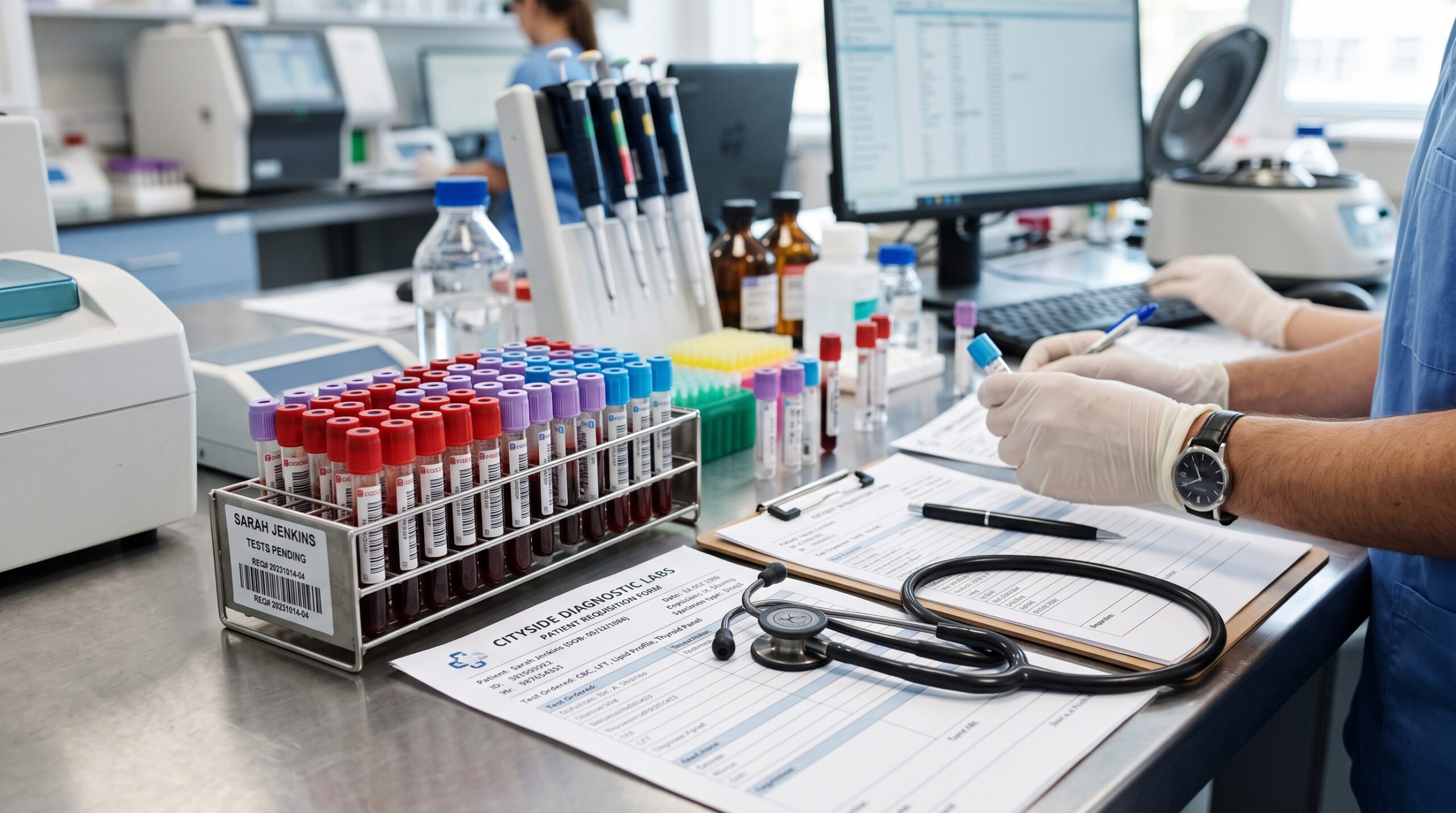
The exogenous intake of androgenic hormones requires rigorous biochemical monitoring. Subjective feelings hide cardiovascular damage. Assessing health by appearance alone fails because cardiovascular damage progresses completely silently. Knowing exactly What blood tests should be done before, after, and during a course of testosterone therapy? is the only scientific method for quantifying the impact on the body and planning a return to physiological balance.
Initial blood tests for baseline values
The blood chemistry tests performed before starting treatment represent the zero value. Initial baselines clarify subsequent test results. Without this baseline, distinguishing compound effects from preexisting latent predispositions proves impossible. The blood sample should be collected at rest, after at least 48 hours of abstaining from high-intensity training, so as not to skew transaminase and muscle marker levels.
Hormonal assessment prior to treatment
The laboratory checks pituitary and testicular function prior to exogenous suppression.
- Total Testosterone and Free Testosterone: map basic endogenous production.
- SHBG (Sex Hormone-Binding Globulin): measures the actual bioavailability in circulation.
- LH (Luteinizing Hormone) and FSH (Follicle-Stimulating Hormone): These indicators of pituitary dysfunction serve as the benchmark for determining post-cycle recovery.
- Estradiol (high-sensitivity E2): provides a baseline for monitoring future aromatase conversion.
- Prolactin: Chronic elevation of this hormone causes erectile dysfunction and secondary gynecomastia.
- DHEA-S and Serum Cortisol: check adrenal-cortical balance.
Cardiovascular function and hematological profile
- Complete Blood Count with Differential: The primary focus is on Hematocrit (Ht) and Hemoglobin (Hb). Testosterone directly stimulates renal erythropoietin, and starting with a hematocrit level already close to 50% poses risks of blood hyperviscosity.
- Lipid Profile: Total Cholesterol, HDL, LDL, and Triglycerides. Exogenous testosterone lowers HDL levels and promotes the oxidation of LDL, increasing the atherogenic index.
Liver and kidney function checks
- AST (GOT), ALT (GPT), and GGT: mark hepatic cytolysis and cholestasis.
- Total and Fractionated Bilirubin: check for proper bile excretion.
- Creatinine, Azotemia (BUN), and eGFR: The estimated glomerular filtration rate determines whether the kidneys handle the increase in nitrogenous waste products and manage fluid retention.
- Uric Acid: marks metabolic overload and kidney function.
Prostate and metabolic health screening
- Total PSA (and Free PSA, if indicated): rules out subclinical prostatic hypertrophy or lesions sensitive to androgenic stimulation.
- Fasting Blood Glucose and HbA1c (Glycated Hemoglobin): monitor peripheral insulin sensitivity.
- Thyroid Panel (TSH, FT3, FT4): Thyroid activity affects drug clearance and SHBG synthesis.
Tests to monitor during the cycle
Organ toxicity appears without warning. Monitoring intra-cycle detects these acute hormonal imbalances early. Blood collection occurs between Weeks 4 and 6.
Parameters to monitor during use
- Hematocrit and Hemoglobin: If the hematocrit exceeds the critical threshold of 53 to 54%, peripheral vascular resistance increases and overloads the left ventricle. Adjusting the dosage or performing therapeutic phlebotomy may be required.
- Estradiol (E2): assesses the extent of aromatase conversion. Excessively high levels cause sodium retention, hypertension, and gynecomastia, while eliminating estradiol with disproportionate doses of aromatase inhibitors disrupts the lipid profile and worsens joint health.
- Transaminases (AST/ALT/GGT): apply especially when using C-17-alkylated compounds or oral delivery systems with intrinsic hepatotoxicity.
- Blood Pressure: A clinical parameter monitored regularly at home because an increase in extracellular fluid is quickly reflected in readings.
Blood tests after the cycle and post-cycle therapy
The post-cycle blood protocol is divided into two distinct phases based on timing and purpose.
Upon completion of exogenous administration
Clearance happens after half-life. Hormone levels drop enough for therapy. It confirms that hormone levels dropped sufficiently to begin post-cycle therapy and assesses cumulative stress on the liver, kidneys, and lipid system.
Six to eight weeks after ending post-cycle therapy
This test determines whether the body returned to hormonal homeostasis on its own. Performing tests while taking selective estrogen receptor modulators like clomiphene or tamoxifen causes false positives because those drugs stimulate pituitary release.
In this final phase, the markers to look for are:
- LH and FSH: They must return to normal ranges, indicating that the signal cascade from the hypothalamus to the pituitary gland resumed.
- Total and Free Testosterone: They must be comparable to initial baseline values prior to the cycle.
- Estradiol and Prolactin: rule out secondary estrogen rebounds.
- HDL and LDL Cholesterol: monitor the recovery of endothelial elasticity and the improvement in dyslipidemia.
- Transaminases and Creatinine: confirm a complete return to normal liver and kidney function.
Managing blood tests safely
Objective data replaces guesswork. Medical professionals provide accurate guidance. Consulting an endocrinologist or sports medicine specialist avoids empirical corrective measures based on conjecture (blood tests for testosterone offer the only reliable guide).